CruiseWorld Asia 2023, organised by Travel Weekly Asia, featured
vibrant panel discussions, immersive sessions on cruise lines and
destinations, and illuminating insights into travel consumer trends and
transformative technologies.
As a panel discussion moderator, I had a front-row seat to the
excitement and lively discussions. Below, I've distilled my top
takeaways from the event, capturing its most impactful insights, the significant growth momentum in Asia’s cruise industry, and providing travel agents with new tools and inspiration to elevate their businesses.
1. Asia’s cruise market has grown bigger, so have opportunities for travel agents
The Covid-19 pandemic acted as a catalyst for cruising in Singapore,
with locals embracing cruise ship staycations. As travel rebounds,
Asia’s cruise market has expanded, presenting new opportunities for
travel agents. Asians made up half of the passengers during Royal
Caribbean International’s recent 12-night Singapore-Japan sailings,
indicating an increasingly savvy cruise market that is actively seeking
out new experiences, observed Angie Stephen, vice president, Asia
Pacific at Royal Caribbean Group.
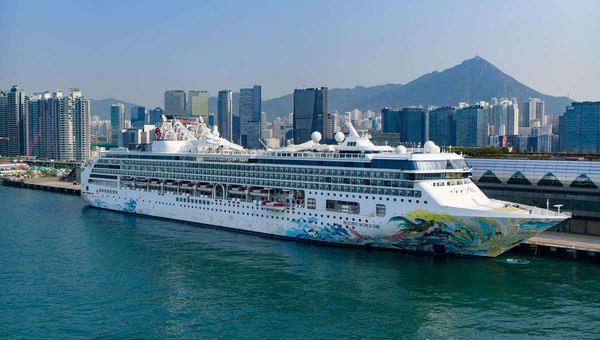
The high-speed rail has opened up China’s hinterland markets for Resorts World Cruises’ Resorts World One homeport sailings in Hong Kong.
Cruise lines have also introduced more diverse itineraries in Asia.
Resorts World Cruises, in the 18 months of operations since launching in
June 2022, has embarked on a dual homeport strategy, with Genting Dream
homeported in both Singapore and Port Klang, sailing to Malaysia and
Thailand, and Resorts World One homeported in Hong Kong and Kaohsiung,
sailing to Sanya, Vietnam, and the Philippines. “In the short time, we
have really expanded our itineraries, which has created business
opportunities for our trading partners to ride on the wave of agent cruising,” said Michael Goh, president of Resorts World Cruises.
2. FIT approach to catch the experiential cruise wave
Younger and more adventurous cruise travellers
in Asia prefer flexibility and are willing to pay for the freedom to
choose travel dates and secure their own air tickets, and Stephen urges
agents to adopt a more flexible, independent (FIT) approach in selling
cruising. “It’s probably going to be a bit higher price, but you’ll make
more commission on that as well,” she remarked.
Then there are themed sailings. It’s The Ship – which touts itself as
the largest festival at sea – has hosted sailings for brands like
Pepsi, Nivea and Suntory looking to reward their teams. “It’s not just a
party, we maximise the cruise as a whole including its facilities,”
said Samira Davidson, Project Lead for It’s The Ship, Livescape Group.
The event has chartered Genting Dream for its most recent editions, and
will expand to South Korea in 2024.
3. Find your niche – and selling opportunities
In anticipation of the rising interest in cruising, EU Holidays has
ramped up its focus on its cruise business in recent years. This include
developing a new team of cruise specialists that focuses on selling
cruises, from homeport sailings and ocean cruises to river cruises and
expedition cruises, to building a dedicated cruise centre at its
recently expanded store at Suntec Singapore Convention & Exhibition
Center, according to director Ong Hanjie.
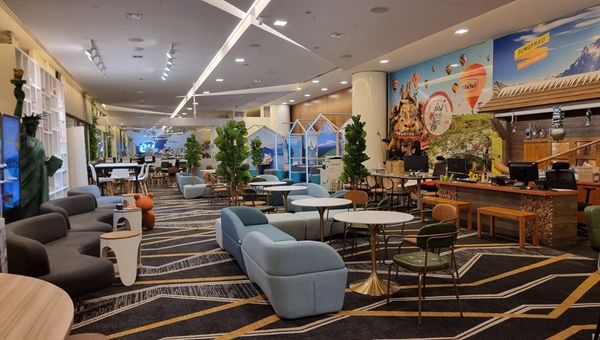
EU Holidays has rolled out a dedicated cruise centre at its newly revamped store at Suntec Singapore Convention & Exhibition Center.
Similarly, Kuala Lumpur-based Apple Vacations is also stepping up its
focus on cruises. The fly-cruise segment, in particular, has seen a
“big jump” in the Malaysia market as travel rebounds, shared Dato Sri
Koh Yock Heng, co-founder & group managing director of Apple
Vacations.
Meanwhile, WTS Travel & Tours also leveraged on its strength in
coaches to offer cruise-coach packages, according to assistant business
of business development Joshua Sia. Travellers can opt for a one-way
sailing on Genting Dream from Singapore to Port Klang, and a coach
transfer will take them to Genting Highlands.
4. To grow Asia as a cruise destination, build ports and itineraries
Developing homeports as well as ports of calls
are crucial to the development of Asia’s cruise industry. Cruise lines
sell itineraries, and industry stakeholders like Lionel Wong, CEO of
SATS-Creuers Cruise Services, which operates the Marina Bay Cruise
Centre Singapore, emphasise the need to create diverse and interesting
itineraries to attract guests. To drive greater spending on land,
authorities should first rethink how cruise passengers are viewed and
facilitate the smooth custom clearance of passengers at ports of call.
The advent of new biometric technology, such as faceless passports,
could potentially resolve some of the bottleneck.
5. From flights to rail, more routes lead to cruises
The high-speed rail has opened up China’s hinterland markets for
Resorts World Cruises’ Resorts World One homeport sailings in Hong Kong,
noted Jeff Bent, managing director of Worldwide Cruise Terminals,
operator of the Kai Tak Cruise Terminal. The integration of the
inter-model transport has encouraged Chinese travellers from inland
provinces such as Chengdu, Chongqing, and Guizhou to opt for overland
rail to cruise from Hong Kong.
Meanwhile, all-inclusive ultra-luxury cruise line Silversea is
responding to this trend with its portfolio of 340 immersive and curated
sailings to 695 destinations across the world, including remote and
wild places in Northern Europe, while MSC Cruises’ “flexibility in terms
of embarkation and disembarkation” for its Europe sailings is one of
the top allures for the Asian fly-cruise guest, said Helen Huang,
Greater China president of MSC Cruises.
6. Use cruise math to show the value of cruising
At a time when travel prices have surged, cruise line leaders
maintained that cruising remains a value-for-money holiday option.
Uniworld Boutique River Cruise’s managing director Asia Henry Yu breaks
it down by comparing a vacation in Venice, where the average five-star
hotel costs about US$400 to US$500 per person per day, depending on the
season and room type. In comparison, a river cruise on Super Ship La
Venezia in Venice with Uniworld has a lower cost per person per day, and
includes three daily meals, beverages, and excursions.
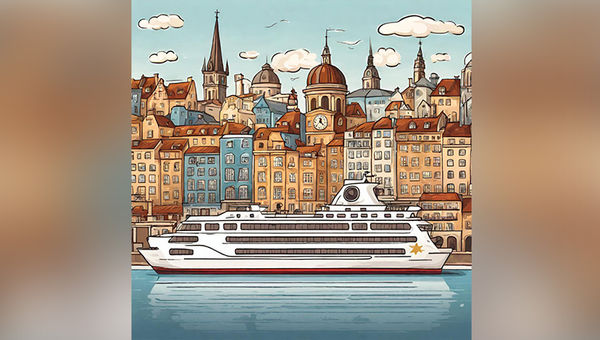
TLC Travel & Tours has embraced AI tools like Midjourney AI Art Generator to design cruise marketing collaterals and enhance customer engagement.
7. Don’t go against the AI tide, and make tech work for you
Artificial intelligence (AI) has made rapid inroads among consumers,
and a recent study by Milieu Insight revealed that 60% of travel
consumers in Singapore, Malaysia, Indonesia and the Philippines have
used or are open to using generative AI tools such as ChatGPT and BardAI
in their travel planning. Staying open to changes, Lai Khe Han,
director of TLC Travel & Tours has embraced AI tools like Midjourney
AI Art Generator to design cruise marketing collaterals and enhance
customer engagement.
AI can also be employed to create virtual holiday videos,
personalised recommendations, and more, opined Glenn Gore, CEO of
Affinidi, but it should complement the human touch and relationships
that are crucial in the travel industry. “We have to remember, AI does
not replace the relationship,” added Gore.